Gum Health
Gum swelling around one tooth: why it usually feels so local
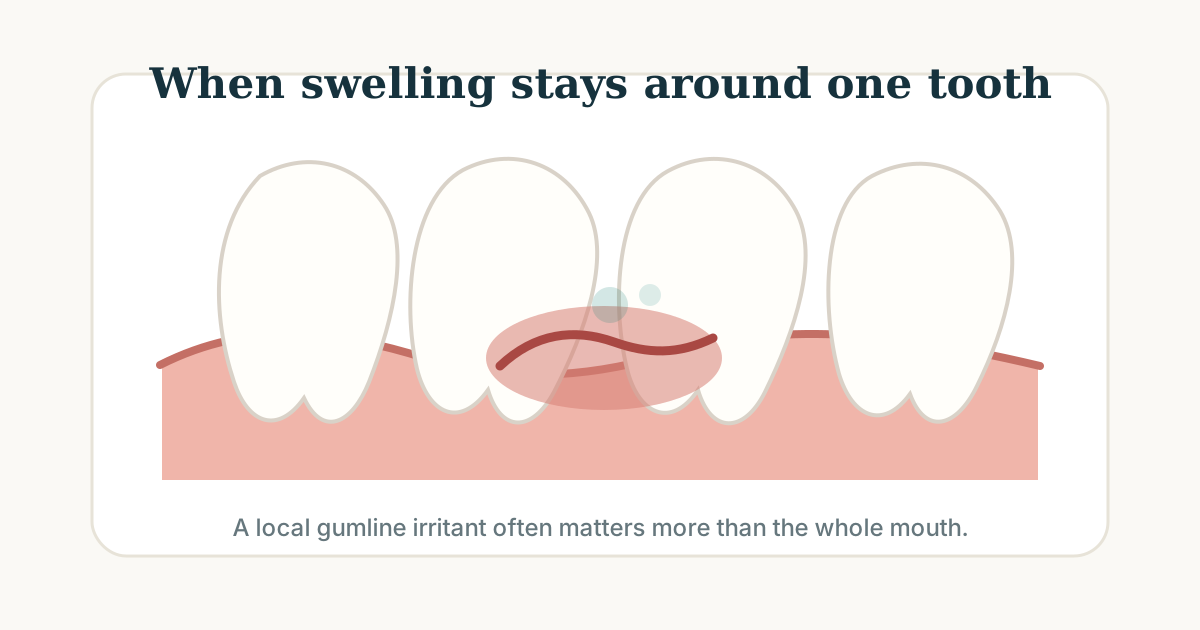
When the gum is puffy around one tooth but the rest of the mouth feels normal, the most useful question is not "What is wrong with my gums?" It is "What is irritating this one spot?"
General gum puffiness usually points to a broader pattern: plaque along several teeth, dry mouth, mouth breathing, or brushing habits. Swelling around one tooth is different. It often means a small, local trigger is sitting right where that tooth meets the gumline. That trigger can be ordinary, but the one-tooth pattern is worth paying attention to because it gives you a narrower place to look.
Why one spot can react more than the rest
The gumline is not perfectly even. A tight contact between two teeth, a crown margin, a retainer wire, a rough filling edge, or a tooth that sits slightly out of line can all create a small shelter where plaque and food debris stay longer. The tissue around that spot gets more exposure to irritants, so it can look puffier while the neighboring gums look calm.
That does not automatically mean there is a serious problem. It does mean the area is telling a more specific story than "my gums are swollen." A single swollen area usually has a single nearby reason.
Common causes to consider
- Food trapped between teeth: popcorn hulls, meat fibers, seeds, and small fragments can wedge under the gum edge.
- Plaque in a hard-to-reach spot: back teeth, crowded teeth, and tight contacts are easy to miss with a toothbrush.
- Flossing trauma: snapping floss into the gum can bruise the tissue and make one area tender for a day or two.
- A dental restoration edge: crowns, fillings, and retainers can collect plaque if the edge is rough or difficult to clean.
- A deeper pocket: if the gum has pulled slightly away from the tooth, debris can sit below where brushing reaches.
What tends to help first
Start gently. Brush the area with a soft toothbrush angled toward the gumline, then clean between the teeth without forcing anything under the tissue. If floss gets stuck or shreds in the same place repeatedly, that is useful information. It can point to a rough edge, tight contact, or spot that needs a dentist's eye.
Warm salt-water rinses may make the area feel calmer, but they do not replace cleaning the trigger away. Avoid poking the swollen gum with toothpicks or sharp tools. That usually adds a second irritation on top of the first one.
When to get it checked
Localized swelling deserves more caution than mild, general puffiness. A dental check is smart if the swelling is painful, keeps returning in the same spot, drains fluid, comes with a bad taste, or makes the tooth feel high, loose, or sore when biting. Those signs can point to something deeper than surface irritation.
Even when the cause is simple, a recurring one-tooth pattern is hard to solve by guessing. A dentist can look for a trapped fragment, a restoration edge, a pocket depth change, or a small crack that is not visible in the mirror.